
A −70°C cold zone and a +200°C hot zone look impressive on a quotation. They still tell you surprisingly little about how a thermal shock chamber will perform with your product inside.
Put a 25 kg aluminum assembly in the test space and the real questions begin.
How quickly does the DUT experience the transition? What temperature is used to define recovery? How much of the nominal chamber volume is actually usable? Does the quoted performance apply to an empty chamber, a reference load, or your load? Can the DUT remain wired during the test? How often will the system need to stop for defrosting?
Those questions make thermal shock chambers harder to compare than their brochures suggest.
This guide looks at ten established thermal shock chamber manufacturers in 2026. It is not a market-share ranking, and the companies are not ordered from best to worst. They use different chamber architectures, serve different specimen sizes and regions, and offer different levels of customization.
The manufacturer list is the starting point.
The real comparison begins with the test.
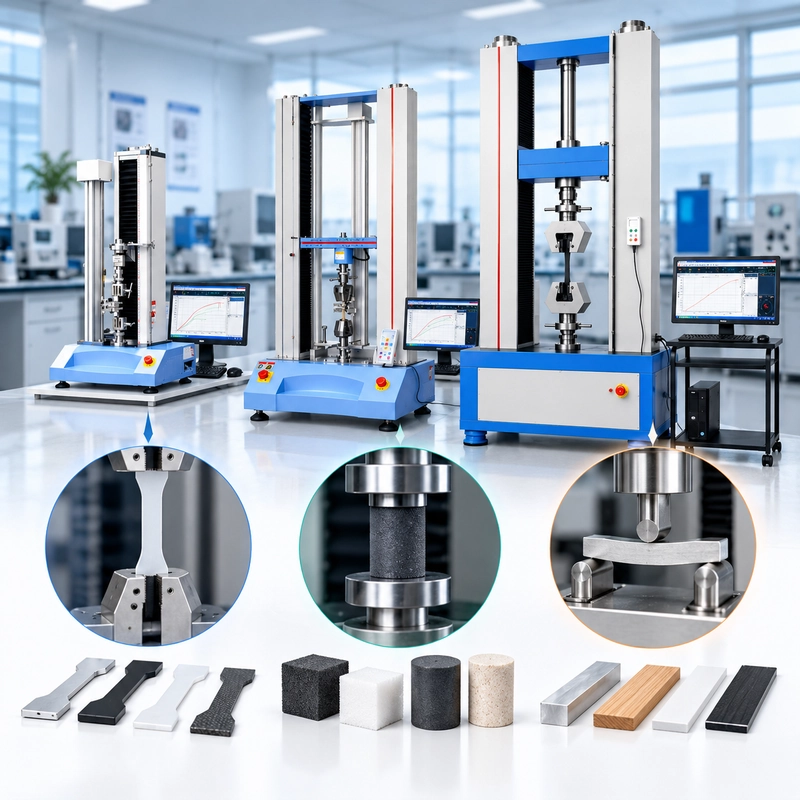
【IMAGE 1 — INSERT HERE】
Main Image — 800 × 800 px
Show representative thermal shock equipment and DUT examples in a clean industrial reliability laboratory.
No large promotional text or competitor logo wall.
Suggested Alt Text: thermal shock chamber manufacturers and test systems
10 Thermal Shock Chamber Manufacturers at a Glance
| Manufacturer | Region | Thermal Shock Approach | Typical Configuration | Procurement Note |
|---|---|---|---|---|
| ESPEC | Japan | Air-to-air / liquid-to-liquid | TSA / TSD / TSE | Fixed-test-area options are useful to investigate for wired or heavy DUTs |
| Weiss Technik | Germany | Horizontal / vertical / liquid | TS Series | Strong focus on carrier configurations and part-temperature recovery |
| Thermotron | USA | Automatic carrier transfer | ATS Series | Vertical and Double Duty architectures address footprint and throughput |
| Angelantoni Test Technologies | Italy | Environmental simulation / specialized systems | ACS systems | Relevant for non-standard and engineered projects |
| Russells Technical Products | USA | Transfer-type environmental systems | Standard / custom systems | Worth investigating for larger or custom DUT requirements |
| Associated Environmental Systems | USA | Vertical basket transfer | SM Series | Detailed carriage, basket and specimen-monitoring information |
| CTS | Germany | Two-chamber temperature shock | TSS Series | Broad test-space range and long-cycle operation |
| KOMEG | China | Two-zone / three-zone | TST / KTS Series | Multiple standard sizes and customized environmental equipment |
| Envisys Technologies | India | Air-to-air / liquid-to-liquid | ETS Series | Wide basket-volume range and regional engineering |
| ITM-LAB | China | Thermal shock / rapid-rate cycling | CTS / KTB | Separates shock exposure from controlled-rate temperature cycling |
Research note: Product information was reviewed against publicly available manufacturer information in September 2026. Specifications, options, refrigerants and regional configurations can change. Confirm the final model and performance conditions directly with the manufacturer before procurement.
How This List Was Built
Manufacturers were included where an active thermal shock product line or identifiable thermal shock system could be verified and enough technical information was available to investigate more than temperature range alone.
That last point matters.
A compact electronics laboratory, a semiconductor reliability facility and a lab testing heavy automotive assemblies do not have the same equipment problem.
There is little value in assigning all three a generic "best thermal shock chamber."
The useful comparison is between the test requirement and the system being proposed.
1. ESPEC
ESPEC is a useful place to begin because its current portfolio shows how different machine architectures can all fall under the thermal-shock category.
Its TSA range uses a fixed test area. Instead of repeatedly moving the specimen itself, dampers switch preconditioned hot and cold air through the test space. Current TSA models cover 40–300 L in the standard range, with larger fixed-area systems also available. ESPEC also offers TSD/TSE transfer-type and liquid-to-liquid equipment. Espec
That architecture is more than a design detail.
Imagine an electronic module connected to twelve thermocouples, power wiring and communication cables. Moving the entire assembly repeatedly creates a different mechanical and wiring problem from leaving the DUT stationary while its surrounding environment changes.
ESPEC's published data is also useful because it shows why recovery conditions need context. Its current thermal-shock information includes specimen conditions, sensor location and recovery criteria rather than presenting only maximum and minimum temperatures. Some TSA configurations also support specimen-temperature monitoring and triggering. Espec
When comparing an ESPEC system with a conventional transfer-basket design, ask one question early:
What actually changes during the transition—the DUT position or the conditioned environment around it?
That answer affects wiring, mechanical loading, monitoring and test workflow.
2. Weiss Technik
Weiss Technik deserves particular attention when DUT mass, carrier architecture or throughput matters.
Its TS range includes horizontal, vertical and liquid systems. The horizontal family can be configured as two-zone single-capacity, two-zone double-capacity or three-zone equipment. In the two-zone single-capacity arrangement, the DUT travels by carrier basket between hot and cold zones; the three-zone design adds an ambient condition. Weiss Technik
The more interesting specification, however, is part-temperature recovery.
Weiss documentation describes guaranteed part-temperature recovery/soak and traveling ports for product-temperature monitoring. Weiss Technik
That gets closer to the actual engineering problem.
A chamber-air sensor may return to the required condition while the center of a dense metal assembly is still lagging behind.
Those are two different definitions of "recovered."
For a heavy DUT, ask how specimen temperature is treated before spending too much time comparing touchscreen size or nominal liters.
3. Thermotron
Thermotron takes the transfer concept in another useful direction.
Its ATS thermal shock chambers automatically move a product carrier between separately controlled zones. Current configurations include vertical systems, which stack hot and cold zones to reduce floor-space requirements, and Double Duty systems that place a cold zone between two hot zones and use two carriers to increase throughput. Thermotron
Why would a laboratory need two carriers?
Throughput.
That can matter considerably in a production reliability lab and very little in a facility running a handful of qualification tests each month.
Thermotron's published model data also demonstrates why "maximum DUT weight" should never be read without its test condition.
For example, the ATS-320-DD-10-7.5 is published with different maximum loads depending on the temperature range and whether LN₂ assistance or mechanical refrigeration is used. The company also defines its reference test-load conditions and notes that additional shelf weight counts toward the test load. Thermotron
So if an RFQ says:
Maximum DUT: 40 kg
the next question should be:
At what hot/cold condition, and with what cooling configuration?
A mass number needs a test condition attached to it.
4. Angelantoni Test Technologies
Angelantoni Test Technologies / ACS is worth considering when the project begins moving away from a conventional catalog chamber.
ACS develops environmental simulation equipment ranging from standard climatic systems to specialized installations. Its published resources include large thermal-shock systems and an air-liquid thermal-shock solution, alongside extensive automotive, battery and aerospace environmental testing work. ACS Angelantoni
For a tray of small electronic components, chamber selection may remain relatively close to a catalog exercise.
A large assembly changes that.
The manufacturer now needs to understand transfer mechanics, fixture geometry, airflow, specimen temperature measurement, thermal mass, wiring and facility integration.
This is where "custom thermal shock chamber" needs to mean more than:
Make the chamber bigger.
Increasing DUT size can change the refrigeration requirement, transfer system and airflow distribution at the same time.
For a non-standard project, send the DUT drawing before asking for a chamber volume.
5. Russells Technical Products
Russells Technical Products is another manufacturer to investigate when the DUT or test arrangement requires more than a conventional small component chamber.
The procurement issue with larger transfer systems is mechanical as well as thermal.
Suppose the DUT weighs 30 kg.
Now add:
a 12 kg fixture, the transfer basket, mounting hardware and monitoring cables.
The DUT is no longer the complete moving load.
Nor is it the complete thermal load.
Everything transferred between zones has to be accelerated, stopped and repeatedly heated or cooled.
For large assemblies, loaded transfer mechanics belong in the RFQ alongside high- and low-temperature exposure.
That requirement is easy to overlook because it rarely appears in a headline specification.
On a large thermal shock system, it can become one of the defining constraints.
6. Associated Environmental Systems
Associated Environmental Systems, or AES, provides a good example of why basket dimensions and refrigeration architecture deserve their own lines in a comparison sheet.
Its current SM range uses independently controlled hot and cold zones with a pneumatically operated vertical transfer basket. The SM-1900 series uses a liquid-cooled cold zone without mechanical refrigeration, while the SM-2100 range uses cascade mechanical refrigeration. AES also lists an optional third ambient zone. Associated Environmental Systems
More importantly, model pages separate carriage dimensions from basket dimensions.
For example, the SM-2102D publishes a 12 × 12 × 12 in carriage while the actual basket dimensions are different. It also lists specimen-temperature monitoring and a traveling port. Associated Environmental Systems
That leads to a simple procurement rule:
Ask for the basket dimensions, not just the chamber volume.
A product may fit mathematically into a nominal volume and still fail the real loading-envelope check.
7. CTS
CTS Environmental Simulation currently offers the TSS series of temperature shock test cabinets.
Its published standard range includes test-space volumes of 66, 130, 350, 500 and 1200 L. CTS lists hot-chamber operation from +50°C to +220°C and cold-chamber operation from −80°C to +100°C for the series. CTS环境模拟
One less obvious specification deserves attention.
CTS states that its standard compressed-air dryer system can support up to 3,000 test cycles without defrosting. CTS环境模拟
For a high-cycle reliability lab, that may matter more than another 10°C of temperature capability that will never be used.
Once the required exposure range has been met, operating questions begin to separate the proposals:
How often does the chamber need intervention?
What specimen monitoring is required?
How will data be recorded?
Where will the refrigeration heat go?
What does the facility need to supply?
These are procurement questions, not brochure trivia.
8. KOMEG
KOMEG represents another part of the thermal shock equipment market: Asian sourcing where configuration scope and customization often play a significant role in the purchasing decision.
KOMEG currently lists both 2-zone and 3-zone thermal shock chamber families. Its product catalog includes TST two-zone equipment and multiple KTS three-zone sizes. KOMEG
For buyers comparing Chinese thermal shock chamber suppliers, the RFQ should remove ambiguity before price comparison begins.
Do not send:
Need three-zone chamber, 100 L. Best price.
Send the actual exposure sequence.
If the procedure requires only hot-to-cold transfer, a more complicated architecture may add cost without solving another test requirement.
The quotation should identify the exact proposed model, usable test envelope, load assumptions, transition method, recovery definition and utilities.
The model number should resolve ambiguity—not create more of it.
9. Envisys Technologies
Envisys Technologies manufactures the ETS thermal shock range in India.
Its current portfolio includes air-to-air and liquid-to-liquid thermal shock systems. Published air-to-air configurations include horizontal or vertical designs with carrier-basket volumes from 50 to 900 L, depending on model. Envisys Tech
Published ETS literature also gives basket-load ratings and a hot-to-cold / cold-to-hot transition time of under 10 seconds for the referenced standard range. Envisys Tech
One distinction is worth preserving here:
Air-to-air and liquid-to-liquid shock are not simply two severity levels of the same test.
The heat-transfer mechanism and specimen interaction are different.
If the governing method specifies air-to-air exposure, select around that requirement. If it specifies liquid immersion shock, treat it as a different equipment problem.
The standard decides. The marketing description does not.
10. ITM-LAB
ITM-LAB separates thermal shock equipment from controlled rapid-temperature-change systems.
That distinction matters because the same temperature endpoints can appear in two completely different RFQs.
The CTS Series addresses thermal shock applications involving rapid high/low temperature exposure.
The KTB Series addresses controlled rapid temperature change, with 250, 500 and 1000 L configurations and 5, 10 or 15°C/min rates.
Consider:
RFQ A
−55°C cold exposure
+125°C hot exposure
Rapid transition between preconditioned conditions
RFQ B
−40°C to +85°C
10°C/min controlled ramp
Both involve high and low temperatures.
They are not asking for the same machine.
For a CTS project, the useful starting information is therefore the test method, DUT dimensions, mass, quantity, required transition and monitoring arrangement—not simply a requested liter capacity.
Before You Compare Quotes: Temperature Range Is Not Thermal Shock Performance
Suppose three suppliers offer:
Cold: −70°C
Hot: +200°C
It is tempting to mark the temperature requirement "passed" and move to price.
Not yet.
Those numbers define an operating envelope. They do not tell you what happens after a 30 kg aluminum assembly is exposed to the opposite condition.
You still need to know:
Transfer time — How quickly does the transition occur?
Recovery — What temperature must recover, and where is it measured?
DUT load — What specimen mass supports the published performance?
Airflow — Can conditioned air reach the surfaces that matter?
Exposure — When does the required dwell actually begin?
Published data from ESPEC and Thermotron illustrates why those details matter: both companies attach conditions such as specimen/load characteristics or recovery definitions to relevant performance claims. Espec
The useful specification is not simply:
−70°C to +200°C
It is closer to:
−55°C / +125°C, defined DUT and fixture load, specified transition, defined recovery criterion and required cycle count.
That is a test requirement.
【IMAGE 2 — INSERT HERE】
Temperature Range ≠ Thermal Shock Performance
−70°C ↔ +200°C
↓
TRANSFER TIME
RECOVERY
DUT MASS
AIRFLOW
EXPOSURE
↓
ACTUAL DUT THERMAL RESPONSE
Bottom Caption:
Temperature endpoints are only the beginning of the specification.
Image Size: 960 × 640 px
Suggested Alt Text: thermal shock chamber temperature range and performance
Two-Zone vs Three-Zone: What Actually Changes Temperature?
The labels sound straightforward.
The machines are not always so simple.
A conventional two-zone system normally alternates the DUT between hot and cold environments. In a basket-transfer design, the specimen physically moves.
A three-zone configuration can add an ambient condition.
But the implementation varies by manufacturer.
Weiss, for example, offers horizontal configurations where products move by carrier basket between defined zones. ESPEC's TSA takes another approach: the test specimen remains stationary while dampers switch preconditioned airflow through the test area. Weiss Technik
That difference affects:
powered DUTs, thermocouple wiring, heavy fixtures, delicate assemblies, mechanical loading and test workflow.
Do not buy a three-zone thermal shock chamber simply because three sounds more capable than two.
Start with the required exposure sequence.
Then choose the architecture.
Empty Chamber vs Loaded DUT
An empty thermal shock chamber is a relatively easy thermal problem.
Now place a 35 kg aluminum assembly inside it.
The chamber has not changed.
The test has.
The assembly stores thermal energy and takes time to heat and cool. Chamber air may reach the target condition well before the center of the product does.
Add a steel fixture and there is another thermal load.
Geometry changes the result too. A thin housing and a compact metal block can weigh the same while presenting very different surface areas and heat-transfer paths.
Material matters as well.
A 20 kg aluminum assembly and a 20 kg polymer/electronics assembly should not be expected to respond identically just because the scale shows the same number.
So DUT mass is essential—but it is not the whole thermal model.
Mass is the first number to ask for, not the last number needed.
【IMAGE 3 — INSERT HERE】
Empty Chamber vs Loaded Chamber
Left:
EMPTY
Preconditioned Air
Low Thermal Mass
Fast Air Recovery
Right:
LOADED
35 kg DUT
Fixture + Basket
Thermal Lag
Center:
SAME CHAMBER
Bottom:
Chamber air temperature ≠ DUT temperature
Image Size: 960 × 640 px
Suggested Alt Text: thermal shock chamber empty vs loaded performance
Nominal Volume vs Usable Test Envelope
A DUT measuring:
500 × 350 × 300 mm
occupies 52.5 L.
Does that mean it fits properly in a 100 L thermal shock chamber?
Maybe.
The calculation tells you nothing about basket width, transfer opening, fixture clearance, airflow clearance, cable routing or DUT orientation.
The specimen has to fit the shape of the usable envelope, not merely consume fewer nominal liters.
For transfer systems, it also has to travel safely through the complete transfer path.
That is why manufacturers such as AES and Thermotron publish actual carriage or carrier dimensions for individual systems. Associated Environmental Systems
Instead of writing:
DUT = 60 L, therefore chamber ≥60 L
send:
DUT = 520 W × 300 D × 420 H mm, 24 kg, vertical orientation, one fixture, four thermocouple leads.
That is information an applications engineer can use.
Example: Three 100 L Quotes That Look Equivalent—but Aren't
Suppose procurement receives three proposals.
| Specification | Quote A | Quote B | Quote C |
|---|---|---|---|
| Nominal capacity | 100 L | 100 L | 100 L |
| Cold condition | −70°C | −70°C | −70°C |
| Hot condition | +200°C | +200°C | +200°C |
| Controller | Touchscreen | Touchscreen | Touchscreen |
| DUT load | Not stated | 20 kg | 30 kg defined |
| Transition | "<10 s" | "<10 s" | Defined under load |
| Recovery | Empty chamber | Air recovery | Loaded DUT criterion |
| Basket dimensions | Not stated | Stated | Stated |
| Cooling | Air-cooled | Water-cooled | Water-cooled |
| DUT monitoring | Optional | 4 channels | Included |
| Calibration | Factory certificate | Traceable option | Included as specified |
| Installation | Not stated | Remote support | On-site |
On the first four rows, the systems look interchangeable.
By the seventh, they clearly are not.
That does not mean Quote C is automatically the right purchase. A lightweight DUT may not require its additional scope.
The point is simpler:
Price comparison should start after technical scope has been normalized.
A lower price is useful information when you know what has been removed—and have decided you do not need it.
What the Spec Sheet Says—and What You Should Ask Next
| Spec Sheet Says | Ask Next |
|---|---|
| −70°C to +200°C | Under what load and recovery condition? |
| 100 L | What are the actual usable basket W × H × D dimensions? |
| Transfer <10 s | What is moving, and at what basket load? |
| Fast recovery | Air recovery or specimen recovery? Where is it measured? |
| Max load 30 kg | Under which hot/cold condition? Does fixture mass count? |
| Three-zone | What is the actual exposure sequence and transfer architecture? |
| Meets IEC 60068 | Which part, test method and severity? |
| Water-cooled | What flow, pressure and inlet-water conditions are required? |
| Automatic defrost | How many cycles can the target profile run before interruption? |
| Calibration included | Which sensors are calibrated, to what scope and traceability? |
This is one of the easiest ways to compare thermal shock chamber suppliers without getting trapped by headline specifications.
Thermal Shock Is Not Rapid Temperature Cycling
This distinction causes a surprising number of poor RFQs.
In a thermal shock test, the DUT is subjected to an abrupt change between preconditioned thermal conditions.
In rapid temperature cycling, the DUT generally remains in one workspace while the chamber changes temperature according to a controlled rate.
Consider:
Requirement A
−40°C → +85°C
10°C/min
This points toward a rapid-rate temperature cycling system.
Requirement B
−55°C exposure
↓
Rapid transition
↓
+125°C exposure
This points toward a thermal shock architecture.
The temperature extremes can overlap.
The test mechanism does not.
ESPEC's current product catalog makes the same equipment distinction, listing TSA/TSD/TSE thermal shock chambers separately from rapid-rate thermal cycle systems. Espec
For ITM-LAB, the corresponding decision is typically CTS vs KTB.
【IMAGE 4 — INSERT HERE】
Thermal Shock vs Rapid Temperature Cycling
Left:
THERMAL SHOCK — CTS
HOT
↓
RAPID TRANSITION
↓
COLD
Abrupt environmental transition
Right:
RAPID TEMPERATURE CHANGE — KTB
−40°C
↓
5 / 10 / 15°C·min
↓
+85°C
Controlled ramp
Bottom:
Similar temperature extremes. Different test methods.
Image Size: 960 × 640 px
Suggested Alt Text: thermal shock vs rapid temperature cycling chamber
Facility Requirements Buyers Often Miss
The chamber is only one part of the installation.
Before issuing a purchase order, check:
Electrical supply
Voltage, phase, frequency and available current.
Cooling water
Required flow, pressure and inlet temperature if the condenser is water-cooled.
Heat rejection
An air-cooled refrigeration system still has to reject heat somewhere.
Compressed air
Transfer mechanisms and air-drying systems may require it.
Drainage
LN₂ / CO₂, if used for boost cooling.
Doorways and rigging access
Floor loading
Final equipment location
Thermotron, for example, publishes electrical requirements and laboratory-condition assumptions on individual ATS models. AES distinguishes refrigeration approaches between its SM-1900 and SM-2100 families. Thermotron
A machine can be suitable for the test and still be unsuitable for the building.
Do the utility review before shipment.
6 Red Flags When Comparing Thermal Shock Chamber Suppliers
1. Temperature range is quoted without loaded performance.
The endpoints tell you where the system can operate, not necessarily how it performs with your DUT.
2. Nominal volume is provided without usable basket dimensions.
Liters do not prove physical fit.
3. "Recovery" appears without a measurement definition.
Ask whether it means chamber air, control sensor or actual specimen temperature.
4. The quotation says "meets IEC/MIL" without the exact method.
A standards family is not a test condition.
5. DUT and fixture mass are absent from the selection.
This is particularly risky with heavy metallic products.
6. Utilities and service are treated as afterthoughts.
Refrigeration service, compressors, controllers, calibration, spare parts and local technical support affect long-term ownership.
Common Standards Associated With Thermal Shock Testing
Keep the standard section simple during equipment selection.
| Standard / Family | Why It May Appear in an RFQ |
|---|---|
| IEC 60068-2-14 | Change-of-temperature testing |
| MIL-STD-810H Method 503.7 | Temperature shock for materiel |
| MIL-STD-883 | Microelectronic environmental test methods |
| MIL-STD-202 | Electronic/electrical component environmental methods |
| JEDEC methods | Semiconductor/component reliability testing |
ESPEC currently identifies IEC 60068-2-14 Na and MIL-STD-883 test compatibility for relevant TSA equipment, while Thermotron and AES publish specific military-method references for relevant models. Espec
But the standard number alone is not enough.
Confirm the exact revision, method, severity, exposure temperatures, dwell conditions, transition requirement and specimen condition.
The chamber should be selected from the actual method, not the standard family name.
How to Write a Thermal Shock Chamber RFQ
A useful RFQ does not need to be long.
It needs to contain the right variables.
Test Method
Provide the exact standard and revision.
Example:
IEC 60068-2-14, Test Na
Hot and Cold Exposure
State both target conditions and required exposure times.
Example:
Cold: −55°C
Hot: +125°C
Transition Requirement
If the method specifies a maximum transition time, include it.
DUT Geometry
Provide:
W × H × D
not just estimated liters.
DUT Mass and Quantity
Example:
8 kg each × 3 specimens = 24 kg
Fixture
Include fixture dimensions, material and mass where relevant.
Powered or Unpowered
A powered DUT may require traveling cables, ports and additional monitoring.
Temperature Monitoring
State the required thermocouple count and whether dwell depends on DUT temperature.
Facility
Include installation country, voltage/frequency, cooling-water availability and compressed-air availability.
Calibration
State any traceability or laboratory-quality requirement before quotation.
Example RFQ
Instead of:
Please quote 100 L thermal shock chamber, −70°C to +200°C.
send something closer to:
Application: Automotive electronic assembly
Standard: IEC 60068-2-14, applicable revision
DUT size: 420 × 280 × 160 mm
Quantity: 2 per test
Total DUT mass: 16 kg
Cold exposure: −40°C
Hot exposure: +125°C
Transition: According to test method
DUT monitoring: 6 thermocouple channels
Powered during test: No
Installation: USA
Power: 480 V / 60 Hz available
Cooling water: Available
Request: Recommend appropriate chamber architecture and state the loaded performance conditions used for selection.
Now the supplier has enough information to engineer rather than guess.
Thermal Shock Chamber Selection Roadmap
【IMAGE 5 — INSERT HERE】
Thermal Shock Chamber Selection Roadmap
WHAT ARE YOU TESTING?
↓
TEST STANDARD + REVISION
↓
HOT / COLD EXPOSURE
↓
WHAT TYPE OF TRANSITION?
Three branches:
TWO-ZONE
Hot ↔ Cold
THREE-ZONE
Hot / Ambient / Cold
CONTROLLED RAMP
Rapid Temperature Cycling
↓
For thermal shock:
DUT W × H × D
↓
QUANTITY + ORIENTATION
↓
DUT MASS
↓
FIXTURE / BASKET MASS
↓
Three branches:
THERMAL
Recovery Requirement
MECHANICAL
Transition + Load
INTERFACE
Power + Cables + Monitoring
↓
USABLE TEST ENVELOPE
↓
COOLING + FACILITY UTILITIES
↓
CALIBRATION + DATA
↓
VERIFY LOADED PERFORMANCE
↓
CONFIGURE THERMAL SHOCK SYSTEM
Bottom Caption:
Define the thermal transition first. Select the chamber second.
Image Size: 960 × 1440 px
Suggested Alt Text: thermal shock chamber selection roadmap
When CTS Makes Sense—and When KTB Makes More Sense
This is an equipment-selection question, not a matter of which machine is "more advanced."
Example 1
−55°C → +125°C
The DUT must experience a rapid transition between preconditioned hot and cold conditions.
Investigate CTS thermal shock architecture.
Example 2
−40°C → +85°C
The chamber must ramp at 10°C/min while the DUT remains in the workspace.
Investigate KTB rapid temperature change architecture.
Example 3
The customer writes:
−70°C to +150°C, thermal shock, 15°C/min.
Do not select the machine yet.
The RFQ mixes terminology from two different test approaches.
Ask for the actual temperature profile or governing standard first.
That one clarification can prevent an expensive equipment mismatch.
FAQ
What is a thermal shock chamber?
A thermal shock chamber exposes a DUT to rapid changes between high- and low-temperature conditions to evaluate failures associated with sudden thermal stress.
Depending on the system architecture, the DUT may move between preconditioned zones or remain stationary while conditioned airflow changes around it.
What is the difference between a two-zone and three-zone thermal shock chamber?
A two-zone system typically provides hot and cold exposure. A three-zone system can add an ambient condition.
The exact mechanism differs by manufacturer, so the required test sequence should be defined before choosing the architecture.
Is thermal shock the same as temperature cycling?
No. Thermal shock generally emphasizes abrupt transition between conditioned environments, while temperature cycling or rapid-rate cycling controls the temperature change within a workspace according to a defined ramp.
The governing test method should determine the equipment type.
How do I choose thermal shock chamber size?
Start with DUT W × H × D, quantity, orientation, fixture, wiring and total load.
Then compare those requirements with the actual basket or usable test-space dimensions—not nominal liters alone.
Finally, verify loaded thermal performance.
Why does DUT mass matter?
A heavier DUT generally requires more energy to change temperature, but mass alone does not determine thermal response.
Material, geometry, surface area, fixture contact and airflow exposure also matter.
What should I send a thermal shock chamber manufacturer?
At minimum:
standard + revision, hot/cold exposure, DUT dimensions, DUT mass, quantity, transition requirement, fixture information, powered/unpowered condition, monitoring requirements, installation country and facility utilities.
A DUT drawing and test profile are usually more useful than a requested chamber volume.
Send the Test Profile, Not Just the Temperature Range
A thermal shock chamber should not be selected from two endpoint temperatures and a liter value.
Start with:
What does the standard require?
Then:
What does the DUT look like?
Then:
How much does the loaded assembly weigh?
Then:
How must it transition between conditions?
Only after those questions are answered should chamber capacity, architecture and refrigeration configuration be finalized.
For an ITM-LAB CTS configuration review, provide:
Standard + revision / Hot and cold exposure / DUT W × H × D / DUT mass / Quantity / Fixture / Transition requirement / Powered or unpowered / Monitoring / Installation country / Facility power
For unusual DUTs, include a drawing.
For heavy DUTs, include the fixture mass.
For wired DUTs, show the cable arrangement.
Define the thermal transition first. Select the chamber second.
